

Ian Davie
Senior Consultant
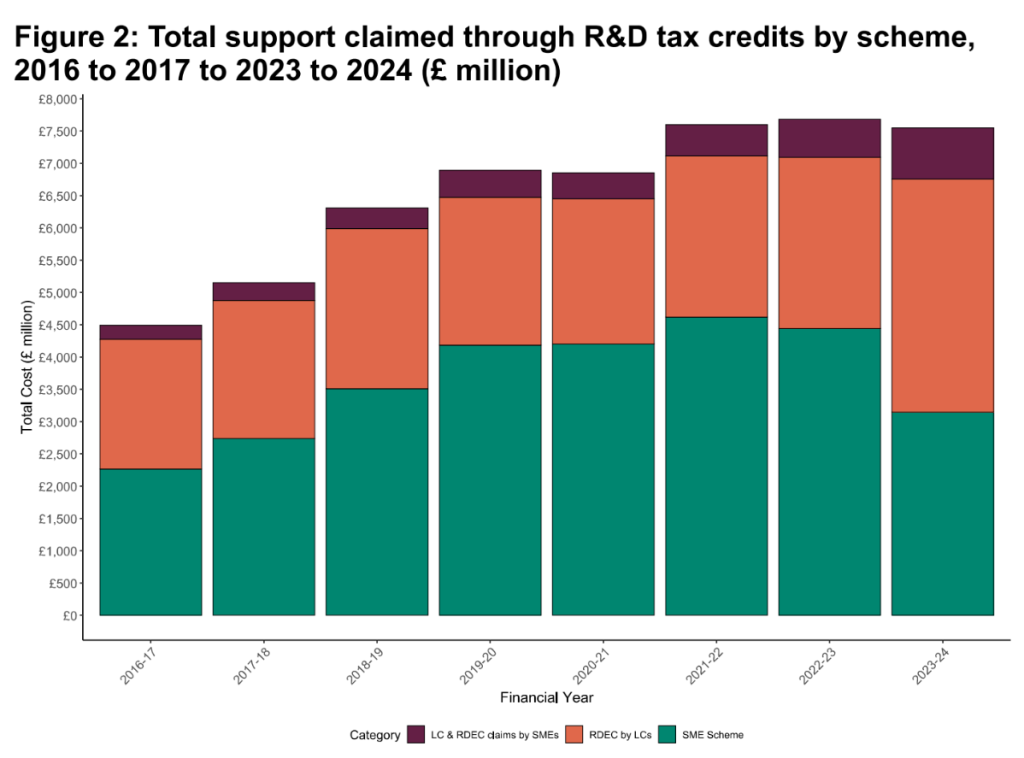
Since 2022, HMRC has been operating a Mandatory Random Enquiry Programme (MREP) to identify errors and fraud in R&D tax relief claims. The total amount of R&D tax relief claimed by companies has risen steadily in recent years, from £4.5 billion in 2016/17 to £7.6 billion in 2022/23. There has been a slight drop so far in 2023/24 to £7.5 billion, although this figure may still be adjusted.
The HMRC MREP is a targeted review programme designed to assess the accuracy and legitimacy of R&D tax relief claims. It focuses on ensuring that claims comply with the rules and reducing instances of error or fraudulent submissions. While its primary aim is to protect the integrity of the R&D tax relief scheme, it has also influenced company behaviour, with some businesses becoming more cautious about submitting claims.
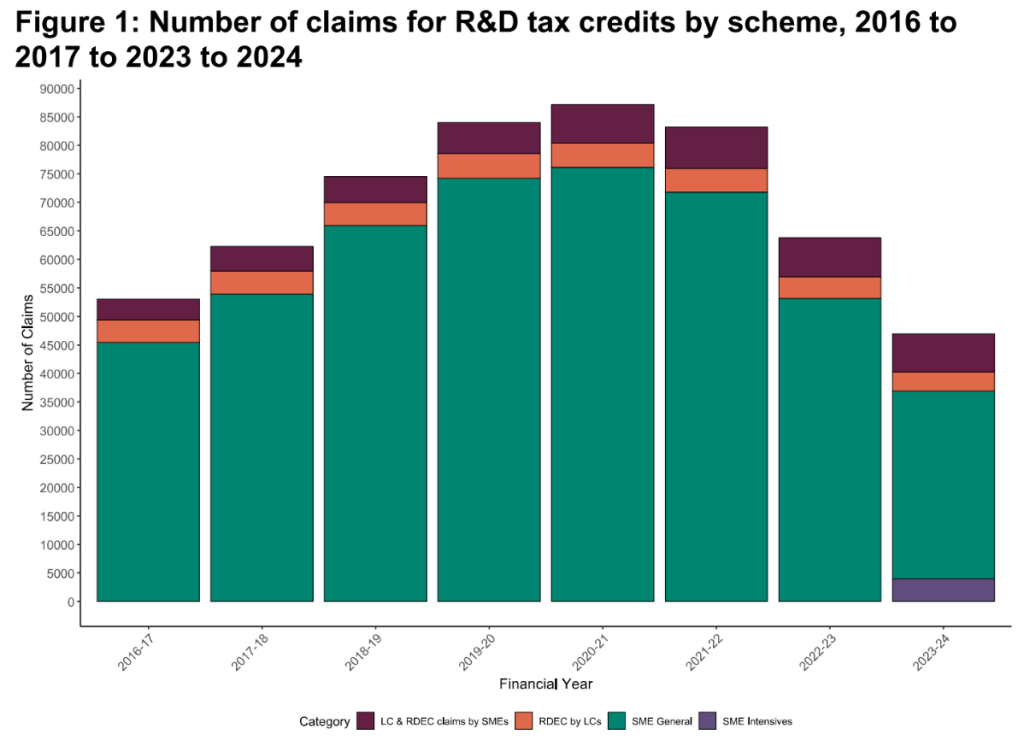
Where the impact of the MREP has been felt is in the number of SME’s claiming. From a peak of 76135 companies in 2020/21, down to around 36885 in 2023/24, a drop of 52%. So, why have so many SME companies stopped claiming R&D tax relief?
There are three possible explanations for the decrease in SME claims:
It is known that HMRC carried out enquiries on 17% of all claims, of which 70% were either compliant or part-compliant. This means that enquiries account for roughly 5% of rejected claims, which would amount to approximately 3,750 company claims per year and roughly 11,250 over three years (crude maths).
So why has the number of SME claimants fallen by 39,000?
Why have 28,000 companies stopped claiming R&D tax relief despite never having been subject to an enquiry, or having had their claims either fully or partly accepted?
The most significant change in the statistics released in September 2025, covering the 2023/24 claim periods and earlier, is the dramatic shift in the number of SMEs claiming R&D tax relief for claims under £100,000 between 2020 and 2024.
| Period | No. of claim up to £20k | No. of claim £20k to £50k | No. of claim £50k to £100k |
| 2020/21 | 37,945 | 19,325 | 10,095 |
| 2023/24 | 13,876 | 10,070 | 6,210 |
| No. of companies not claiming | 24,070 | 9,255 | 3,885 |
Approximately 12,000 companies were likely found ineligible over this period. That still leaves over 25,000 companies that chose to stop claiming R&D tax relief.
Likely reasons they did not claim include:
This is purely conjecture, as I don’t have data to prove it, but the reality is likely a combination of all the factors mentioned above, possibly in equal measure. However, the biggest impact of the HMRC MREP is the shift in behaviour. Even when companies are carrying out genuine R&D, which 70% are according to the HMRC enquiry statistics, many feel the risk of submitting an R&D claim is no longer worth it.
Yes, errors and fraud are being reduced, but in equal, if not greater amounts, likely companies are doing genuine R&D that are no longer making claims because of the perceived risk of an enquiry or the increased effort required to submit a claim.
The total value claimed has remained static at around £7.6 billion for four years, including the recent National Audit Office report indicating the figure remains consistent for 2024/25.
Error and fraud may be down, but it has stopped around 25,000 smaller SMEs claiming around £750 million in R&D relief. Is this the way to support our growing SME innovation base?
While the MREP is helping reduce R&D tax relief error and fraud, it is also changing company behaviour, potentially restricting access to vital innovation funding for legitimate SMEs. Is this supporting the UK’s SME innovation ecosystem or inadvertently stifling it?
If the impact of HMRC’s MREP has left you unsure about claiming R&D tax credits, or if you’re concerned about compliance and how enquiries could affect your business, TBAT Innovation can help. Our experts provide personalised guidance to maximise your eligible relief, reduce risk, and ensure your claims are fully compliant. Get in touch today to discuss how we can help your business continue to benefit from R&D tax relief without fear of unnecessary risk or administrative burden.
Sources:
HM-Revenue-Customs-Overview-2024-25.pdf
Research and Development Tax Credits Statistics: September 2025 – GOV.UK
Our comprehensive 2025 R&D Tax Credits review covers everything businesses need to know, including key developments in R&D tax reliefs, claim trends, compliance updates, HMRC enforcement actions, First Tier Tribunal cases, and changes to schemes like RDEC, ERIS, and Advance Clearance. Explore the impact on SMEs and large companies, insights on eligible costs and foreign subcontractor rules, and what to expect for R&D tax credits in 2026.

An HMRC R&D compliance check can be intimidating, even for businesses doing genuine innovation. This article walks you through what happens during a check, the information HMRC typically asks for, common issues that can arise, and how TBAT Innovation helps businesses respond confidently and keep their R&D tax credit claims strong.
Assists organisations in accessing research and development grant funding across a range of UK and EU schemes and industry sectors.
Get In Touch
 Call
Call 

 Back
Back